

This Depression Study Changed How I Think About EMF
New research shows magnetic fields affect brain networks in unexpected ways

I've been thinking about a rat study all week.
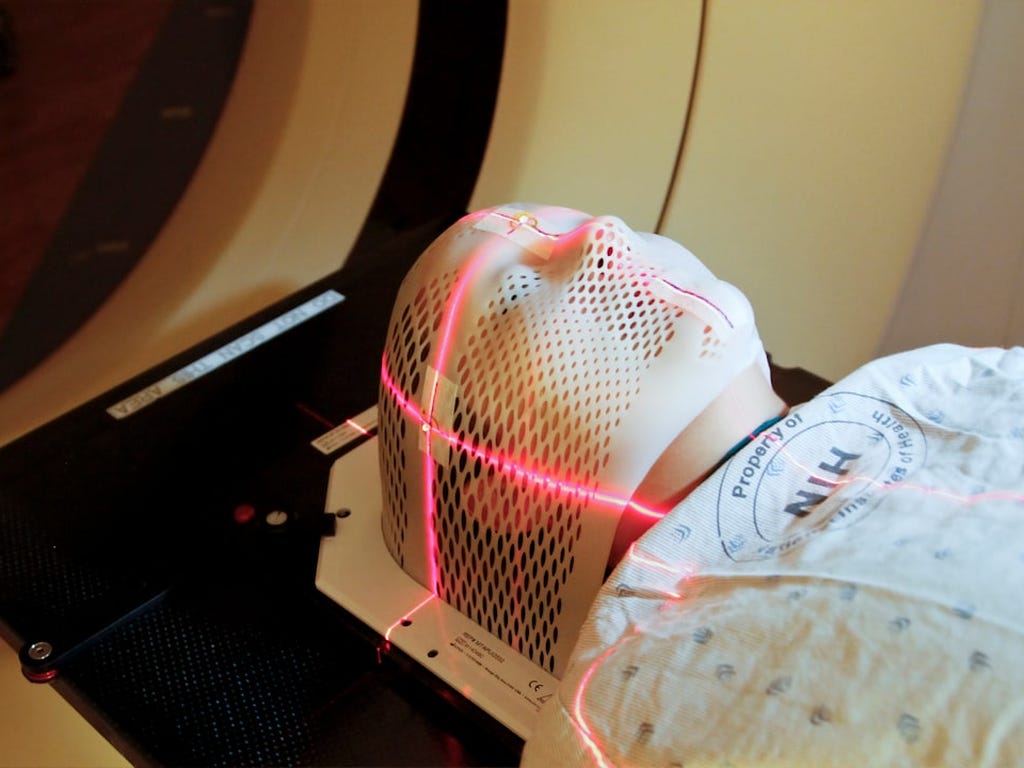
I know how that sounds. But this particular piece of research stopped me cold because it demonstrates something I've suspected for years but haven't seen proven this clearly: electromagnetic fields don't just affect the tissue they directly contact. They create ripple effects throughout interconnected biological systems in ways we're only beginning to understand.
What the Researchers Found
Scientists publishing in Brain research in 2025 revealed findings that should fundamentally change how we think about EMF and the brain. They used repetitive transcranial magnetic stimulation (rTMS) on rats with induced depression—applying a 10 Hz magnetic field daily for 15 days.
The treatment worked. Depression-like behaviors decreased. The rats showed improvements in sucrose preference tests, forced swimming tests, and anxiety measurements. That part isn't surprising—rTMS has been proposed as an alternative therapy for modulating cortical neuronal activity.
Here's what got my attention: when the researchers examined the rats' brains using immunofluorescence labeling, they found that dopamine D2 receptor density had decreased in both the dorsal striatum and the prefrontal cortex. The magnetic stimulation didn't just affect the targeted area. It altered neurochemistry in brain regions throughout the dopaminergic network.
The researchers were explicit about this: "These results indicate that rTMS affects not only the stimulated region but also influences the dorsal striatum." The changes in dopamine receptor density in these interconnected regions corresponded with the behavioral improvements the rats showed.
This matters because dopamine pathways are fundamental to how we experience reward, motivation, and mood. The researchers note that "changes in dopaminergic transmission through the mesolimbic pathway have been identified as part of the pathophysiology of depression," but they focused on the nigrostriatal pathway, noting "there are only a small number of studies examining the relationship between the nigrostriatal pathway and depression."
The study used a chronic unpredictable mild stress model to induce depression in the rats, then applied the 10 Hz magnetic field treatment. After 15 days, the treated rats showed measurably reduced depression-like behaviors compared to both sham-stimulated and untreated control groups. The correlation between receptor changes and behavioral improvements suggests the magnetic field created functional alterations in how these neural circuits operate.
The Network Effect Nobody Talks About
Here's my take on why this research matters beyond depression treatment.
Your brain isn't a collection of isolated regions that function independently. It's an integrated network where electrical and chemical signals cascade through interconnected pathways. When you stimulate one node in that network—whether therapeutically or through ambient EMF exposure—you're not just affecting that single point of contact.
This study demonstrates that a 10 Hz magnetic field applied to one brain region altered dopamine receptor density in anatomically distant but functionally connected areas. The effects propagated through the neural network. The researchers observed changes in the dorsal striatum even though that wasn't the primary stimulation target.
Now consider what this means for the EMF exposures you encounter daily. These aren't therapeutic 10 Hz fields—they're different in frequency and typically lower in intensity than clinical rTMS.
But the principle remains: electromagnetic fields interact with biological systems in ways that extend beyond simple localized heating or direct tissue stimulation. The stress response doesn't stay confined to the exposed tissue—it initiates cellular cascades that affect interconnected biological systems.
I think the research community has been too focused on looking for direct cause-and-effect relationships between EMF exposure and specific health outcomes at the point of contact. What this depression study reveals is that we need to consider network-wide effects. A magnetic field applied to your prefrontal cortex can alter neurochemistry in your striatum. An EMF exposure to one part of your body might trigger biological responses in connected systems elsewhere.
The honest answer is we don't yet know the full extent of how everyday EMF exposures affect these biological networks in humans. But this research provides a mechanistic framework for understanding why EMF effects might be more complex and far-reaching than we currently understand.
What This Means for You
The research shows therapeutic magnetic fields can create beneficial changes in brain networks. That doesn't mean all EMF exposures are beneficial—or that they're all harmful. What it means is that electromagnetic fields interact with your biology in sophisticated ways that deserve your attention.
Here's what you can do:
Recognize that proximity matters for network effects. The closer an EMF source is to your body, the stronger the field strength and the more likely it is to interact with your biological systems. Your phone against your head during calls creates much stronger exposure than your phone across the room. Distance is your simplest protection strategy.
Understand that duration compounds exposure. This study used 15 days of repeated stimulation to create measurable changes in brain chemistry. Chronic exposure matters more than acute exposure for biological effects. Sleeping next to your phone every night for months or years creates different exposure patterns than occasional use.
Consider frequency and modulation. The researchers used 10 Hz—a specific frequency chosen for its therapeutic properties. Different frequencies interact with biological systems differently. Higher-frequency EMF from wireless devices may interact with biological systems in ways we're still discovering.
Focus on high-exposure scenarios first. You can't eliminate all EMF exposure in modern life. Target the situations where you're exposed to strong fields for extended periods: sleeping environment, workspace setup, device-carrying habits. Small changes in these high-exposure scenarios create bigger reductions in total exposure than worrying about every possible source.
Don't dismiss non-thermal biological effects. This study joins a growing body of research showing that EMF can alter biological function without heating tissue. The dopamine receptor changes in this depression research represent non-thermal mechanisms that deserve consideration.
The Bottom Line
This research demonstrates that a 10 Hz magnetic field treatment reduced depression-like behaviors in rats by altering dopamine receptor density throughout interconnected brain networks—not just at the stimulation site. The effects propagated through neural pathways in ways that created system-wide neurochemical changes.
That's a proof of principle that electromagnetic fields interact with biological networks in complex ways that extend beyond the point of direct contact. It's evidence that we need to think about EMF exposure not just in terms of localized effects, but in terms of how fields might influence interconnected biological systems.