

Your Gut Bacteria Are Listening to EMF
New research shows magnetic fields alter bacterial gene expression—and that matters for your microbiome

I've been thinking about this study all week.
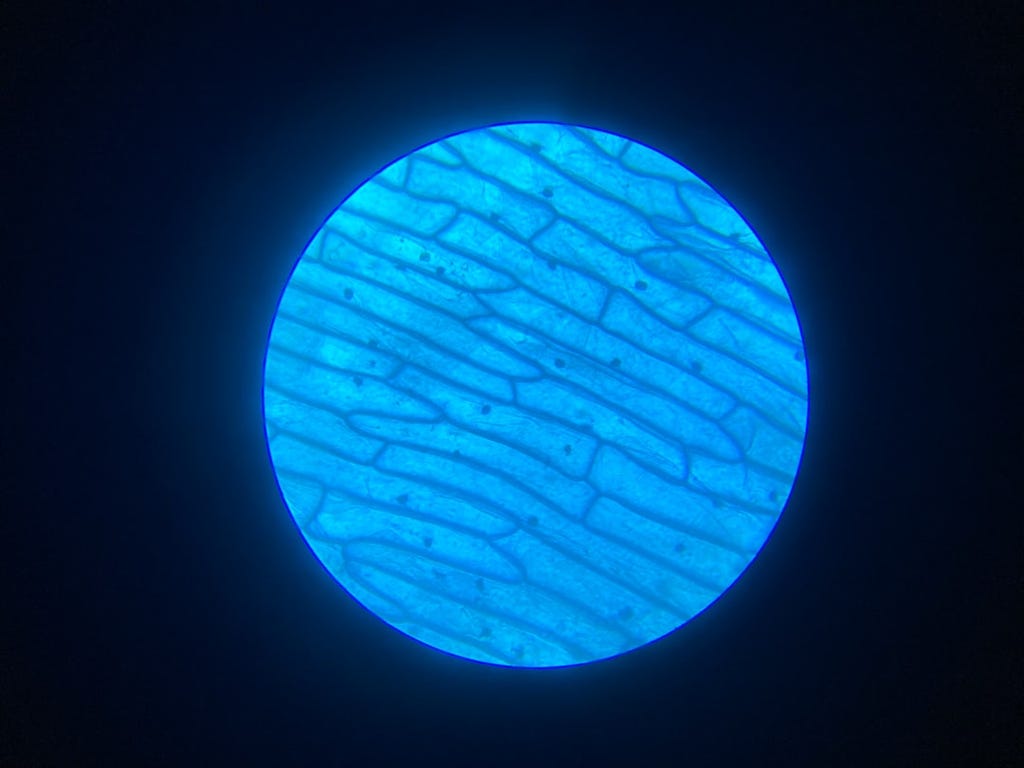
Not because it's about bacteria producing cellulose—though that's interesting. But because it's one of the clearest demonstrations I've seen of electromagnetic fields changing how living cells function at the genetic level. And if it's happening in bacteria, we need to talk about what that means for the trillions of bacteria living in your gut right now.
The Study That Got My Attention
Researchers at Wroclaw University of Environmental and Life Sciences in Poland exposed Komagataeibacter xylinus bacteria to rotating magnetic fields and measured what happened to their genes. The study, published in Biomacromolecules in 2025, looked at bacterial cellulose synthase genes—the genetic instructions that tell bacteria how to produce cellulose.
They tested two frequencies: 5 Hz (extremely low frequency, similar to what you'd find near power lines) and 50 Hz (the frequency of electrical current in most of Europe and much of the world). The bacteria were exposed for periods ranging from 12 to 72 hours.
Here's what they found: the magnetic fields significantly increased expression of these genes. The effect was strongest at 5 Hz, where gene expression increased substantially. At 50 Hz, the effect was present but less pronounced. The longer the exposure, the stronger the effect—with the most significant changes appearing after 72 hours.
The researchers measured this increase in cellulose production directly: up to 28% more cellulose was produced by the exposed bacteria compared to controls. This wasn't a subtle effect. This was a fundamental change in how these cells were functioning.
Why Bacteria Matter More Than You Think
Here's the part most people miss: your body contains roughly as many bacterial cells as human cells. Some estimates put the ratio even higher. These bacteria—your microbiome—play crucial roles in digestion, immune function, mental health, and metabolism.
We've known for years that EMF exposure can affect human cells. But your gut bacteria are also cells, with their own DNA, their own gene expression, and their own responses to environmental stressors. If rotating magnetic fields can alter gene expression in Komagataeibacter xylinus, what are they doing to the hundreds of species of bacteria living in your intestines?
The honest answer: we don't know yet. But we do know that disruptions to the gut microbiome—changes in which species thrive and which ones don't—have been linked to everything from inflammatory bowel disease to depression to obesity.
This study demonstrates that EMF can fundamentally change how bacteria operate at the genetic level. That's not a theoretical concern. That's a mechanism.
My Take
Here's what I think this means.
We've spent decades studying how EMF affects human cells—neurons, sperm cells, blood cells. That research is important. But we've largely ignored the fact that we're not just human. We're ecosystems. The bacteria in our gut outnumber our own cells, and they're constantly responding to their environment.
This study shows that even at relatively low frequencies—5 Hz is lower than most household EMF—magnetic fields can change bacterial behavior. Not just stress them. Not just slow their growth. Change which genes they express and how much of their cellular machinery they produce.
Now extrapolate that. You're surrounded by EMF all day: your phone, your WiFi router, your laptop, the wiring in your walls, the power lines outside. Most of this is higher frequency than what was tested in this study. And it's not rotating in a controlled lab pattern—it's a chaotic soup of overlapping frequencies.
What is that doing to your microbiome? Are certain bacterial species more sensitive than others? Are beneficial bacteria being suppressed while harmful ones thrive? We don't have those answers yet. But this study suggests we should be asking those questions urgently.
The other thing that strikes me: this wasn't a short exposure. The strongest effects appeared after 72 hours. That's chronic exposure, not acute. It's the pattern we see over and over in EMF research—the effects compound over time. A few minutes probably doesn't matter. A few hours starts to matter. A few days, a few months, a few years? That's where the biological systems start to break down.
What This Means for You
I'm not going to tell you to panic about your gut bacteria. But I am going to tell you to take this seriously. Here's what you can do:
Reduce nighttime EMF exposure in your bedroom. Your gut bacteria are most active while you sleep. Turn off your WiFi router at night. Keep your phone in another room or in airplane mode. This gives your microbiome eight hours of lower EMF exposure every day.
Distance matters for magnetic fields. The strength of magnetic fields drops off rapidly with distance. Don't sleep with your head near outlets or circuit breaker boxes. Move your bed away from walls with heavy wiring. Even a foot or two makes a difference.
Support your microbiome actively. Eat fermented foods, get enough fiber, avoid unnecessary antibiotics. If EMF is a chronic stressor on your gut bacteria, you want those bacteria as resilient as possible. Think of it like sleep: you can't eliminate all stress, but you can make sure your body has what it needs to recover.
Measure your exposure. You can't manage what you don't measure. Get a simple EMF meter and check the magnetic field levels where you spend the most time—your bed, your desk, your couch. You might be surprised. I've seen people discover they were sleeping two feet from a transformer or working directly over a junction box.
Prioritize low-hanging fruit. You don't need to eliminate all EMF. Focus on the exposures you can control easily: distance from devices, turning things off when not in use, hardwiring instead of WiFi where practical. Small changes in chronic exposure patterns matter more than perfect elimination of occasional exposures.
The Bottom Line
This study is a proof of concept: electromagnetic fields can alter gene expression in bacteria. Not just stress them. Not just kill them. Change how they function at the most fundamental level.
You are not just you. You're a colony. And that colony is responding to the electromagnetic environment you create around it.
What do you think? Have you noticed any gut health changes since increasing your EMF exposure? Hit reply—I read every response.
Want to dive deeper into the research? Browse over 1,500 peer-reviewed studies in the SYB Research Hub.